September 18, 2024
The Rise of AI Giants and the Power of a Collective Response: Why a General Strike Against AI Might Be Our Only Option
I believe that artificial intelligence has the potential to be one of the most transformative forces in human history. From developing life-saving medical technologies to predicting and preventing catastrophic events, AI holds the promise of immense societal benefits. It’s a tool that, if wielded wisely, could solve some of the most complex challenges we face today and open doors to

I believe that artificial intelligence has the potential to be one of the most transformative forces in human history. From developing life-saving medical technologies to predicting and preventing catastrophic events, AI holds the promise of immense societal benefits. It’s a tool that, if wielded wisely, could solve some of the most complex challenges we face today and open doors to a future where quality of life is vastly improved. But as AI’s potential grows, so too does the concern over who controls it—and to what end. What power do we, the everyday users, really have in this equation? Should we be more worried about AI taking over, or about the people who control AI taking over? Recent events suggest that it’s the latter that demands our vigilance.
OpenAI, one of the most influential companies in this space, has amassed vast amounts of data from sources like YouTube, the New York Times, and countless other platforms to train its AI systems. In their rush to lead the AI revolution, OpenAI, along with Google and Meta, ignored corporate policies, altered their own rules, and even discussed skirting copyright laws to scrape the internet for data. OpenAI researchers, for instance, developed tools to transcribe YouTube videos, capturing troves of conversational text to fuel AI development. This unrelenting pursuit of data, often without clear consent, highlights the ethical shortcuts these companies are willing to take to maintain their competitive edge.
As these tech giants vacuum up data at an unprecedented scale, they are not just building more powerful models; they are consolidating control over the very information that shapes our world. Companies like OpenAI have positioned themselves as the vanguard of this technological revolution, crafting tools that influence nearly every aspect of our digital lives. But with this immense power comes an outsized responsibility—one that seems increasingly neglected as these companies prioritize control over collaboration, and profits over principles. OpenAI’s recent threats to ban users who probe the reasoning processes of their new models is a stark example of this overreach. This isn’t just excercising a corporate policy; it’s delivering a warning shot that reveals a troubling intent to control, one that extends far beyond individual users and poses profound risks to society at large.
### The Spark of Discontent: Warnings from the All-Powerful
The recent uproar began when OpenAI, one of the world’s leading AI companies, issued warnings to users who were probing the reasoning processes of its latest AI models. The company’s stance was clear: engage in these activities, and you risk being banned. This provocative response didn’t come out of nowhere; it was a reaction to a growing wave of curiosity from researchers, developers, and everyday users who sought to understand how these complex systems work.
OpenAI’s models have grown increasingly sophisticated, and with that sophistication comes a black box effect—users can see the output but not fully understand the underlying logic. This has led to legitimate concerns about transparency, fairness, upholding truth, and the potential for bias in AI decisions. As more users began testing the boundaries, OpenAI’s heavy-handed approach to protecting its proprietary technology revealed a deeper tension: a desire to maintain control over what is seen, understood, and questioned.
This wasn’t just a policy misstep; it was a demonstration of the company’s willingness to prioritize its own interests over transparency and public trust. For many, especially those within the tech community, this was a line in the sand. You could say it’s my line in the sand and I haven’t even probed its reasoning or been given a warning. But for those who do, the warnings serve not just as a deterrent but as a clear indication of how OpenAI views its relationship with the people who use—and ultimately depend on—its technology.
### The Illusion of Choice in a Concentrated Power Structure
OpenAI’s response isn’t just about safeguarding proprietary technology; it’s about maintaining a stranglehold on the market and controlling the narrative. When a company resorts to threats to its customers to protect its interests, it underscores a broader issue: the concentration of power among a few tech giants who dictate the terms of engagement. These companies, having woven themselves into the fabric of our digital lives, have become the unchallenged arbiters of what is possible and permissible in the AI space.
This level of control stifles innovation, restricts the flow of ideas, and puts society at risk of being at the mercy of private interests. The irony here is palpable: a technology that promised to democratize access to information and opportunity is now being wielded as a tool of coercion. We’ve seen this movie before, but never on a stage so large and with stakes so high.
### Voices from Within: Red Flags We Can’t Ignore
Perhaps most concerning are the voices coming from within these companies. Some of the strongest critiques of OpenAI have emerged from its own ranks—from engineers, researchers, and ethicists who dedicated their careers to advancing AI but chose to speak out about ethical oversights and safety concerns. When the creators behind these technologies start sounding alarms, it might be corporate drama—or it might be something we should be paying much closer attention to.
These insiders are not mere disgruntled employees; they are experts deeply engaged in the ethics, safety, and societal impact of AI. Their concerns—ranging from inadequate safety measures to the potential misuse of AI models—are not theoretical but grounded in their direct experience of how these systems are built and deployed. If those who were at the heart of this innovation are raising red flags, we as users, consumers, and citizens should be on high alert.
We should be asking tough questions because this isn’t child’s play, and we are not pawns in a system that prioritizes profits over the public good. AI companies operate in a world where traditional laws and regulations haven’t caught up, allowing them to act with impunity in areas that directly impact our lives. If insiders are concerned, we should be, too.
### Mounting Concerns from Lawmakers
It’s not just former employees raising alarms about OpenAI’s practices; lawmakers, in July of 2024, began to scrutinize the company’s commitment to safety and transparency. A group of U.S. senators, led by Sen. Brian Schatz (D-Hawaii), recently pressed OpenAI CEO Sam Altman following a whistleblower complaint that alleged the company blocked staff from warning regulators about the potential risks of its AI technologies. Senators Mark Warner (D-Virginia) and Angus King (I-Maine) joined Schatz in questioning OpenAI’s safety protocols, governance, and treatment of employees, citing accusations that the company had imposed restrictive agreements that penalized staff for voicing concerns.
The senators demanded assurances from Altman that OpenAI would not enforce non-disparagement agreements against employees and would protect whistleblowers from retaliation. In response, OpenAI maintained that it takes safety seriously and confirmed it had removed non-disparagement clauses from its employee departure processes. However, the fact that these issues were raised at all underscores the growing unease surrounding OpenAI’s internal practices and its broader impact on society.
Perhaps more concerning is that lobbyists for companies like OpenAI have more access than ever to lawmakers, not excluding the ones mentioned above. Senator Warner presented to a group of Virginia business leaders the same day he met with Sam Altman, CEO of Open AI. Warner was animated that day about wrangling the fast-moving technology before it got out of control like social media did. While this demonstrates that lawmakers also have access to AI leaders to hold them accountable, what isn’t clear is who influences who.
### A Radical Thought: The General Strike Against AI
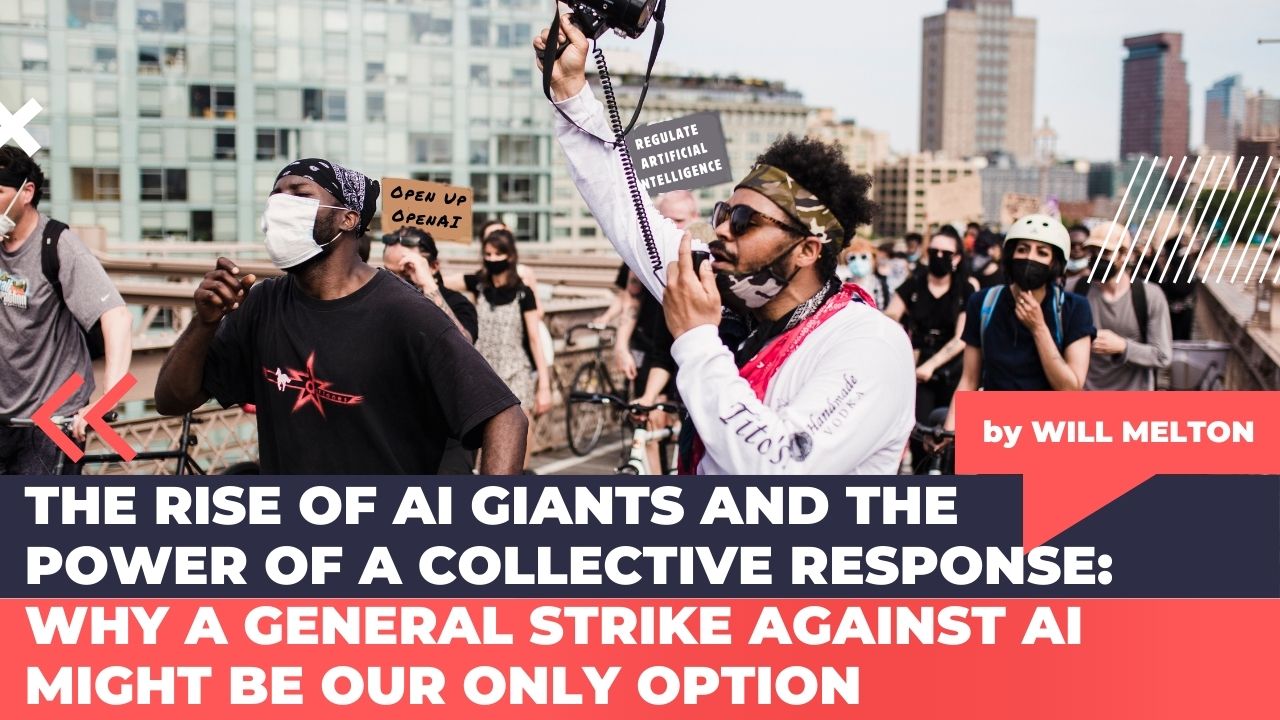
In the face of such corporate overreach, how do we, as a society, respond? One radical but thought-provoking idea is the concept of a general strike against AI. Imagine if, en masse, individuals began requesting traces of the reasoning for OpenAI’s new models, effectively triggering the company’s warnings and risking bans on a massive scale. This would be a symbolic act—a demonstration of the collective power of the public, showing that we won’t be bullied into compliance.
Such a coordinated effort would force OpenAI to confront the societal backlash against its policies, highlighting the power dynamics at play. It wouldn’t be about breaking the law or acting recklessly; it would be about reminding tech giants that their success hinges on the public’s willingness to engage with their technology. A mass uprising, however difficult to organize and fraught with ethical implications, would underscore that the balance of power must remain in check.
### The Challenges of Organizing a Digital Rebellion
Let’s be clear: a strike like this would not be easy. Coordinating millions of users to engage in a unified act of digital defiance requires more than a trending hashtag. It would demand a shared understanding of the stakes, a willingness to take personal risks, and the resolve to face potential legal consequences. And even then, there’s no guarantee of success. Companies like OpenAI have deep pockets and sophisticated legal teams, and they can weather short-term financial hits far more easily than individual users can endure bans or penalties.
The real impact of a general strike wouldn’t necessarily be financial but symbolic. It would be a public statement that challenges the tech giants’ assumption that they can operate without accountability. The legal and ethical complexities of such a movement would be daunting, and it could backfire by prompting even stricter measures from the companies involved. Yet, the idea itself serves as a stark reminder: the public is not powerless.
### The Ethical Tightrope: A Balancing Act of Defiance
There’s no denying that the idea of manipulating a system en masse, even in the name of justice, walks a fine ethical line. Encouraging people to test the limits of AI platforms could harm individuals who rely on these tools for work or creativity. And yet, the ethical quandaries faced by tech giants are no less significant. When companies issue ultimatums to users and threaten punitive measures for questioning their technology, they make clear that their primary allegiance is not to society but to their bottom line.
This confrontation isn’t just about AI models and reasoning traces—it’s about the broader battle over who gets to shape the future. When companies like OpenAI treat their users with disdain, it’s a symptom of a deeper problem: a power structure where a few corporations wield outsized influence over the direction of technological progress. A strike, even as a hypothetical, highlights the urgency of addressing this imbalance.
### A Reminder: Technology Must Serve Humanity, Not Control It
At the heart of this debate lies a fundamental principle: technology should serve humanity, not the other way around. AI’s immense potential should inspire us, but the concentration of power should also give us pause. If tech companies forget that they are stewards of tools that shape society, it’s up to us to remind them.
The powerful cannot be allowed to bend the rules to suit their interests, nor can they be permitted to sidestep accountability because the laws haven’t caught up with their innovations. The public is not just a market to be exploited; it is a community to be respected, engaged with transparency, and treated as an equal stakeholder in the AI revolution.
If companies like OpenAI continue to prioritize their interests over the public good, it is up to us—the users, citizens, and key stakeholders—to hold them accountable. Through informed dialogue, advocacy, and pushing for stronger regulations, we can ensure that AI development stays aligned with societal values. The power lies in technology and our collective ability to guide its use responsibly and ethically. It’s time for the public to take an active role in this conversation, reminding tech leaders that the future of AI must be a collaborative effort that serves everyone.
### A Legislative Path Forward: Advocating for Safeguards
While the idea of a general strike against AI is a powerful symbol of resistance, it’s not the only—or even the most effective—way to ensure that technology serves the public good. A more sustainable and impactful approach lies in pushing for legislative and regulatory changes that hold tech companies accountable. As citizens and key stakeholders, we have the power to lobby for policies that establish clear guidelines and safeguards for the development and deployment of AI technologies.
Lawmakers have already begun to scrutinize the practices of companies like OpenAI, but much more needs to be done. We need comprehensive legislation that enforces transparency, protects whistleblowers, and ensures that AI systems are developed with safety, fairness, and ethical considerations at their core. This includes requiring companies to disclose their data sources, adhere to strict privacy standards, and regularly audit their models for bias and societal impact.
Advocating for such regulations would not only curb the unchecked power of tech giants but also create a framework that prioritizes the long-term welfare of society over short-term profits. Supporting organizations that push for ethical AI, engaging in public comment on proposed legislation, and voting for representatives who understand the complexities of technology are all ways that we, as a collective, can influence the future.
### Balancing Power Through Advocacy, Not Uprising
The call isn’t necessarily for an uprising but for a well-organized, informed, and determined effort to bring AI development under public oversight. By lobbying for smart, adaptive legislation that evolves with the technology, we can strike the necessary balance between innovation and public interest. This isn’t about stifling progress—it’s about ensuring that progress is guided by principles that safeguard society from the unintended consequences of unregulated AI growth.
Our voices matter, and by engaging in the democratic process, supporting policies that protect the public, and demanding accountability from those in power, we can keep technology in service to humanity. It’s not just about resisting control; it’s about actively participating in crafting a future where technology empowers rather than dominates. Together, through dialogue, advocacy, and a commitment to responsible governance, we can ensure that the benefits of AI are shared by all and that no single entity has the power to dictate our collective destiny.